Tag Archives: Structural Integration

Part 3: Who is structural integration for?

We’ve talked about what structural integration is and how it approaches fascia and movement. That brings us to one of the most common questions:

Who is structural integration for?

There isn’t one type of person who seeks structural integration.

Some people discover it because they feel stiff or restricted. Some are physically active and want to better understand how their bodies move. Others have noticed patterns in their posture or movement that they would like to address.

And some simply want to feel more comfortable and connected in their bodies.

Reasons People Explore Structural Integration

People may consider structural integration when they’re interested in addressing things such as:

  • Chronic feelings of tightness or restriction
  • Postural and movement habits
  • Repetitive movement patterns
  • Changes in movement following previous injuries
  • Physical demands from work or hobbies
  • Athletic movement and body awareness
  • General mobility and ease of movement

Structural integration isn’t about creating one “perfect” posture that everyone should achieve. Human bodies are designed to move, and every person’s structure, history, activities, and needs are different.

The goal is to work with the individual in front of us.

What Happens During a Session?

A structural integration session may begin with a conversation about what you’re experiencing, your history, your daily activities, and what you hope to gain from the work.

Your practitioner may observe how you stand or move and look for patterns throughout the body.

Hands-on work is then tailored to what is observed and what you are experiencing. Depending on the approach, you may also be asked to make small movements during the work or become more aware of how you move.

Structural integration can be performed as individual sessions, but it is also commonly approached as a series because different sessions can explore different relationships throughout the body.

It’s a Collaborative Process

One of the most valuable aspects of structural integration can be increased awareness.

You may begin noticing how you stand at your desk, where you hold tension, how you distribute your weight, or how one part of your body participates in a movement.

The practitioner isn’t simply “fixing” your body. The work is a collaboration that can help you become more aware of your own patterns and explore different ways of moving.

Curious Whether It’s Right for You?

If you’ve spent years thinking of your body as a collection of individual problem areas—tight shoulders, stiff hips, an uncomfortable back—structural integration offers another way of looking at things.

Your body functions as a whole.

And sometimes understanding the relationships between its parts can provide a new perspective on how you move, stand, work, exercise, and experience everyday life.

If you’re curious about structural integration, a conversation with a qualified practitioner can help you understand the approach and determine whether it makes sense for your goals.

Structural integration does not diagnose or treat medical conditions and should not replace appropriate medical care. If you’re experiencing new, severe, persistent, or unexplained symptoms—or have an injury or medical condition—talk with your healthcare provider about the appropriate care for you.
Part 2: How Does Structural Integration Work?

In Part 1 of our series, we introduced structural integration as a whole-body approach to bodywork. Now let’s look more closely at what a practitioner is actually working with—and why an issue in one area of the body may be connected to patterns somewhere else.

One of the central components of structural integration is fascia.

What Is Fascia?

Fascia is connective tissue found throughout the body. It surrounds and helps support muscles, bones, nerves, blood vessels, and other structures, creating an interconnected network from head to toe.

This interconnectedness is important when thinking about movement.

Your shoulder doesn’t operate completely independently of your rib cage. Your pelvis doesn’t move independently of your spine. Your feet can influence how you stand and walk, which can affect what happens farther up the body.

Structural integration looks at those relationships.

Your Body Is Very Good at Compensating

Imagine you injure your ankle.

For a while, you may put more weight on the opposite leg. Your stride changes. Your pelvis may begin moving differently. Your back may compensate for the altered movement.

The ankle eventually feels better—but some of those movement habits can linger.

Compensation isn’t necessarily a bad thing. It’s one of the ways our bodies allow us to keep functioning. But when compensatory patterns become habitual, they can sometimes contribute to inefficient or uncomfortable movement.

And injuries aren’t the only reason these patterns develop.

They can also be influenced by repetitive work, prolonged sitting, athletic activities, stress, surgeries, habitual posture, or simply years of moving in familiar ways.

Looking Beyond the Symptom

This is where structural integration differs from approaches that concentrate exclusively on a symptomatic area.

If someone experiences recurring shoulder tension, for example, a structural integration practitioner may certainly work with the shoulder—but may also consider the rib cage, spine, neck, breathing mechanics, pelvis, or other areas that influence how the shoulder moves.

The purpose isn’t to chase symptoms around the body. It’s to understand the larger movement pattern.

Creating New Possibilities for Movement

Through hands-on fascial work and movement awareness, structural integration aims to help the body explore more efficient options for movement and organization.

For some people, that may translate into feeling less restricted. Others may notice greater awareness of their posture, easier movement, or changes in how they perform everyday activities.

The process is highly individual because no two bodies arrive with exactly the same history or movement patterns.

That’s one of the central ideas behind structural integration:

Instead of treating the body like a collection of separate parts, we look at the relationships between those parts.

In Part 3, we’ll talk about who may consider structural integration, what a session is like, and what to expect when beginning the process.

Structural integration is complementary bodywork and is not a substitute for medical evaluation, diagnosis, physical therapy, or other necessary healthcare. Consult an appropriate healthcare professional about unexplained, persistent, severe, or worsening symptoms.

Let’s Talk About Structural Integration

If you’ve heard the term “structural integration” but aren’t quite sure what it means, you’re not alone. It’s often compared to massage, stretching, or other forms of bodywork, but structural integration has a different focus: looking at how the body is organized and how its different parts work together.

Structural integration is a form of hands-on bodywork that works primarily with the body’s fascia—the connective tissue that surrounds and supports muscles, bones, nerves, and other structures throughout the body.

Rather than focusing only on the place that feels tight or uncomfortable, a structural integration practitioner looks at the body as a whole.

Your Body Is Connected

Think about what happens when you develop a habit such as sitting at a desk for hours, carrying a child on the same hip, favoring one leg after an injury, or repeatedly performing the same movements at work.

Your body is remarkably adaptable. It finds ways to accommodate what you ask it to do.

Over time, however, those adaptations can influence posture and movement throughout the body. A restriction in one area may change how another area moves. That is one reason the location where you feel discomfort isn’t always the only area worth considering.

Structural integration takes this whole-body relationship into account.

The Role of Fascia

Fascia forms a continuous network of connective tissue throughout the body. It helps support and connect different structures while allowing them to move in relationship to one another.

Structural integration uses intentional, hands-on techniques to work with the fascial system and explore areas where movement may feel restricted or inefficient.

The goal isn’t simply to make a tight muscle feel looser for a few hours. The broader intention is to support more balanced, coordinated movement throughout the body.

More Than Posture

Structural integration is often associated with posture, but posture is only part of the picture.

A practitioner may also look at how you stand, walk, breathe, shift your weight, rotate, bend, or perform movements that are part of your everyday life.

Instead of asking only, “Where does it hurt?” structural integration asks a bigger question:

How is your entire body organizing itself to move through the world?

That whole-body perspective is at the heart of structural integration.

In Part 2, we’ll take a closer look at fascia, compensation patterns, and why working on one part of the body may influence how another part feels and moves.

Structural integration is not a substitute for medical diagnosis or treatment. New, persistent, or concerning pain and other symptoms should be discussed with an appropriate healthcare professional.

What Is Rolfing® Structural Integration? (And Why It’s So Much More Than a Massage)

If you’ve ever heard the word Rolfing® and thought, “Isn’t that just a really deep massage?”—you’re not alone.

It’s one of the biggest misconceptions about Rolfing Structural Integration.

While it does involve hands-on work with the body’s connective tissue (fascia), Rolfing is actually an educational approach to improving posture, movement, and overall function. Rather than simply treating sore muscles, it looks at how your entire body is organized in relation to gravity.

So…What Is Rolfing?

Rolfing Structural Integration was developed by Dr. Ida P. Rolf, a biochemist who spent decades studying how the body adapts to gravity and movement patterns.

Over time, injuries, repetitive movements, surgeries, stress, and even emotional experiences can cause the body’s fascial system to tighten and compensate. These compensations may not only affect the area where pain is felt—they can influence the entire body.

A Rolfer works to help restore balance throughout the body by addressing these fascial restrictions while helping clients discover more efficient ways of moving.

The goal isn’t simply to feel better for a day.

The goal is to help your body function better for years to come.

What Is Fascia?

Fascia is a web-like connective tissue that surrounds every muscle, bone, nerve, organ, and blood vessel in your body.

Think of it as your body’s internal support system.

When fascia becomes restricted or loses its natural glide, it can contribute to:

  • Chronic pain
  • Limited mobility
  • Poor posture
  • Muscle tension
  • Compensation patterns
  • A feeling of stiffness or imbalance

Because fascia connects everything, a problem in one area may show up as pain somewhere completely different.

How Is Rolfing Different From Massage?

Massage generally focuses on relaxing muscles and relieving tension.

Rolfing looks at why that tension developed in the first place.

Instead of chasing symptoms, sessions focus on improving how your whole body works together.

That may include:

  • Improving posture
  • Increasing range of motion
  • Helping joints move more freely
  • Creating more efficient movement patterns
  • Reducing chronic strain
  • Improving body awareness

Many clients notice they stand taller, breathe easier, and move with less effort after a series of sessions.

Does Rolfing Hurt?

This is probably the most common question.

The answer is: it shouldn’t be unnecessarily painful.

Modern Rolfing is not about forcing tissues to change through excessive pressure.

A skilled Rolfer works with your nervous system and fascia to create lasting change. Some areas may feel tender or intense—especially where long-held restrictions exist—but communication is always part of the process.

Treatment should be effective, not punishing.

Who Can Benefit?

Rolfing may be helpful for people experiencing:

  • Chronic neck or back pain
  • Hip discomfort
  • Shoulder tension
  • Limited mobility
  • Postural imbalances
  • Athletic performance goals
  • Recovery after injury (with physician clearance)
  • Scar tissue restrictions
  • Repetitive stress from work or hobbies

Every person is different, and a thorough evaluation helps determine whether Rolfing is an appropriate fit.

Is Rolfing Right for You?

If you’ve been treating the same pain over and over without lasting relief, it may be worth looking beyond where it hurts.

Sometimes the answer isn’t at the site of the pain—it’s in how the entire body is working together.

Rolfing Structural Integration helps address those larger patterns so your body can move with greater ease, efficiency, and comfort.

As always, consult with your physician before beginning any new treatment, especially if you have medical conditions, recent injuries, or have recently had surgery.

Curious whether Rolfing could help your specific situation? I’d be happy to answer your questions and help determine whether it’s the right fit for you.

Ehlers-Danlos Syndrome: A Gentle Approach to Structural Integration and Rolfing

In Part 1, we talked about what Ehlers-Danlos syndrome (EDS) is, common symptoms, and how structural integration or Rolfing may play a supportive role. In Part 2, we’re diving deeper into what this work can actually look like for someone with EDS—and why a gentle, highly individualized approach matters so much.

Why EDS Bodies Need a Different Approach

If you have EDS, your body doesn’t respond to movement and touch the same way as someone without hypermobility.

Because connective tissue is more elastic, joints often lack stability. The body adapts by creating tension patterns: muscles gripping, overworking, and compensating to hold everything together. Over time, this can lead to:

  • Chronic muscle tightness
  • Fatigue from overuse
  • Joint instability or frequent “slipping” sensations
  • Pain that moves or feels inconsistent

This means the goal is not to increase flexibility. Most people with EDS already have plenty of that.

The goal is support, awareness, and efficiency.


What Structural Integration Can Focus On

When adapted appropriately, structural integration or Rolfing may support individuals with EDS by focusing on:

1. Reducing Excess Tension (Not Adding Stretch)
Instead of pushing the body deeper, sessions can help calm overactive muscles that are working overtime to stabilize joints.

2. Improving Body Awareness (Proprioception)
Many people with EDS struggle with proprioception—knowing where their body is in space. Gentle, intentional touch can help improve awareness and coordination.

3. Encouraging More Efficient Movement Patterns
Small shifts in how you stand, walk, or move can reduce strain on unstable joints and decrease fatigue over time.

4. Supporting Better Relationship with Gravity
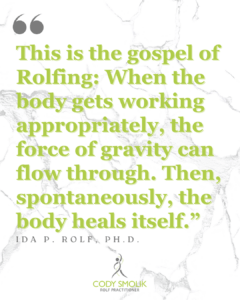
A core principle of Rolfing, influenced by Ida Rolf, is helping the body organize in a way that works with gravity instead of constantly fighting against it. For someone with EDS, this can mean less effort spent just “holding yourself together.”


The Importance of a Collaborative Care Plan

Structural integration should never exist in isolation for someone with EDS.

The most effective approach often includes:

  • Medical oversight from your doctor or specialist
  • Strength-based physical therapy
  • Nervous system regulation (rest, pacing, stress management)
  • Education on movement and daily habits

Think of Rolfing or structural integration as one piece of the puzzle, not the entire solution.


Who Might Benefit Most

While research is still limited, individuals with EDS who may benefit from this type of work often include those who:

  • Experience chronic muscle tension or guarding
  • Feel disconnected from their body or movement
  • Are already working on strength and stability
  • Want a gentle, body-aware approach to pain management

A Final Word of Caution

EDS exists on a spectrum, and some types—especially vascular forms—require extreme care.

Before beginning structural integration or Rolfing:

  • Talk with your doctor
  • Share your diagnosis with your practitioner
  • Ask about their experience working with hypermobility

Your safety always comes first.


The Takeaway

Living with EDS can feel like your body is constantly working against you. The right kind of support can help shift that experience.

Structural integration and Rolfing aren’t about “fixing” your body.
They’re about helping you move with more ease, awareness, and support—within the body you have.

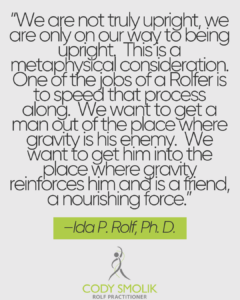
Most of us spend our lives fighting gravity by compensating, tightening, and holding.

But what if your body didn’t have to fight… what if it could be supported instead?

This is the heart of Rolfing®: helping the body find alignment so gravity becomes a source of ease, strength, and support.

Not forcing change, but guiding the body back to where it’s meant to be.

What is Ehlers-Danlos Syndrome?

Ehlers-Danlos Syndrome: Symptoms, Support, and How Structural Integration or Rolfing May Help

What is it?

Ehlers-Danlos syndrome, often called EDS, is a group of inherited connective tissue disorders that can affect the joints, skin, blood vessels, and other tissues throughout the body. In general, EDS is associated with joint hypermobility, skin hyperextensibility, and tissue fragility, though symptoms and severity can vary widely depending on the type. There are 13 recognized types of EDS, and hypermobile EDS is one of the most commonly discussed.

Many people with EDS deal with symptoms that can be frustrating, painful, and difficult to explain. Common signs can include overly flexible joints, frequent sprains or subluxations, chronic pain, fatigue, easy bruising, abnormal scarring, soft or stretchy skin, headaches, and digestive or autonomic issues. For some, symptoms are mild. For others, they can significantly affect daily life and function.

Because EDS affects connective tissue, the body often has to work harder to create stability. Muscles may become overworked trying to support lax joints, and that can contribute to chronic tension, discomfort, guarding, and fatigue. Exercise and physical therapy are widely recognized as important parts of management because stronger muscles can help support hypermobile joints and improve function. There is no cure for EDS, but treatment and symptom management can make a meaningful difference.

What are some options?

This is where some people become interested in hands-on therapies such as structural integration or Rolfing. Structural integration is a form of manual therapy that focuses on fascia, posture, movement patterns, and whole-body alignment. Some small studies on structural integration suggest it may help with pain, mobility, posture, or movement quality in certain populations, but the research base is still limited, and high-quality evidence specific to EDS is lacking. A recent evidence review commissioned by the Australian government found no existing systematic reviews specifically evaluating Rolfing or structural integration.

That matters, because when we talk about EDS, it is important to be both hopeful and careful. Structural integration or Rolfing should not be presented as a cure for EDS. However, it may serve as a supportive, individualized tool for some people, especially when the goal is to reduce muscular tension, improve body awareness, encourage more efficient movement patterns, and help the body feel less guarded. This kind of work may be most helpful when it is gentle, adapted for hypermobility, and paired with a broader plan that includes medical care, strengthening, stability work, and symptom-informed pacing. Evidence for hEDS and generalized hypermobility currently more strongly supports therapeutic exercise and motor function training than hands-on bodywork alone.

For individuals with hypermobility, the biggest consideration is finding practitioners who understand that more movement is not always better. Many people with EDS do not need to be pushed deeper into stretch. They often need support, control, proprioception, and less strain on already unstable joints. Some hypermobility guidance notes that gentle manual therapy, soft tissue work, and myofascial techniques can be helpful for pain and muscle spasm, but they should be used thoughtfully and as part of a larger stability-focused plan.

It is also important to remember that EDS is not one-size-fits-all. Some types, especially vascular EDS, carry serious risks related to blood vessel and organ fragility. Vascular EDS can involve arterial, intestinal, or uterine fragility, and potentially life-threatening rupture or perforation. That is one reason it is essential for anyone with known or suspected EDS to check with their physician or specialist before beginning any new hands-on treatment plan.

If you have EDS or suspect you may have it, the best next step is to talk with your doctor and build a care team that understands hypermobility and connective tissue disorders. If you are considering structural integration or Rolfing, look for a practitioner who is willing to work gently, communicate clearly, and coordinate with your broader treatment plan. Supportive bodywork may be a useful part of feeling better in your body, but it should always be approached with care, medical awareness, and realistic expectations.

A gentle reminder: this article is for educational purposes only and is not medical advice. If you have EDS, hypermobility, frequent joint instability, unusual bruising, severe pain, dizziness, fainting, or a known vascular condition, consult your doctor before starting structural integration, Rolfing, or any other manual therapy.


“If you listen to your body when it whispers, you won’t have to hear it scream.” — Unknown

It’s important to understand that everything is connected, and pain and discomfort don’t always show up at the source. Please listen to your body when it whispers. Let’s talk about balance and improvement. Structural integration is a key tool in your wellness toolbox.


CHRONIC PAIN

Having chronic pain is not for the faint of heart.  It is the monkey on your back, that black hole, the all consuming nightmare that is with you.  Giving it a name:  “Pain” or owning it: “My pain” only sets you back.  It then takes on a life of its own. These are constant themes that all people who have chronic pain have lived.lighteing clouds

Many times an injury is gone but the tissue cannot let go so pain can linger.   People spend years trying to find out what is causing their discomfort and all out pain.  Once they do, it is a matter of constant research because they soon realize that they need to.  Trial and error.  Figure out what works and when and keep moving.   Research. Get your tool box together.  Experiment. The answers will appear.  The body can heal.  It does require patience and knocking on doors.  And listening.  But it does and can get better.  I have lived it and I understand it.  Structural Integration can unravel the tissue to the source and peel off layers of stuck tissue.  The more we can unwind, stretch and open up different layers that lead to the core, we discover a person who is no longer stuck in their bodies, stuck in pain.  This is worth the work.