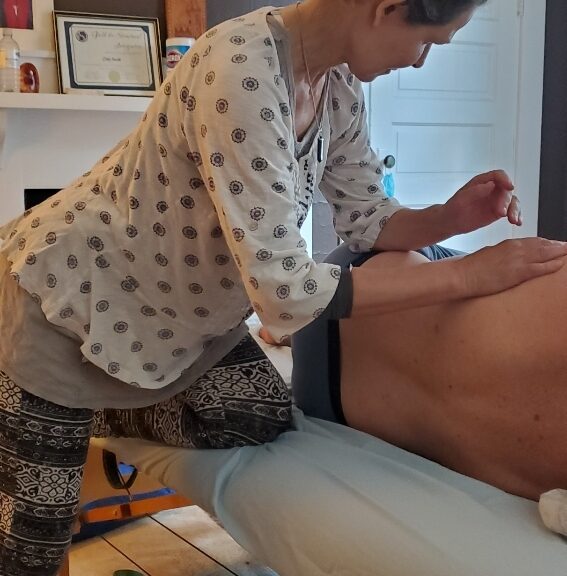
You’ve tried massage. You’ve stretched, rested, maybe taken something for the ache. It helps for a day or two, and then the same tightness creeps back. If that sounds familiar, Structural Integration (S.I.) offers a different way of looking at the problem.
S.I. is hands-on bodywork that focuses on fascia, the connective tissue that wraps and links every muscle, bone, nerve and organ. It works to bring the whole body into better balance with gravity rather than focusing on just the pain point. I’m Cody Smolik, an Advanced Rolf Practitioner in Greenville. I’ve practiced S.I. since 2007 and work with clients across the Upstate, from Greenville to Spartanburg and Anderson.
Where Structural Integration came from
S.I. was developed by Dr. Ida P. Rolf, a scientist well ahead of her time. She earned a Ph.D. in biochemistry from Columbia University in 1920, then researched organic chemistry at the Rockefeller Institute (Dr. Ida Rolf Institute). Health challenges in her own family led her to study osteopathy, yoga and other approaches. They all pointed to the same idea: the way the body is aligned affects how well it functions.
Her central insight was about gravity. It pulls on us every moment of every day. When the body is out of balance, the fascia holding it together adapts to that strain, creating patterns of tension and compensation. Dr. Rolf asked what it would take to organize the body so it works with gravity instead of fighting it. Structural Integration was her answer, and the name she chose for her work.
To teach it, Dr. Rolf founded and named the Guild for Structural Integration in the mid-1960s. It has trained practitioners in her original method for decades, and I am one of its graduates. Today the Guild is known as the American Guild for Structural Integration (AGSI), a nonprofit that carries Dr. Rolf’s original work forward (AGSI).
What is fascia, and why does it matter?

Fascia is a strong, continuous web of tissue throughout the body. It helps muscles, ligaments and tendons glide smoothly over bone and cartilage. Healthy fascia is supple and elastic. (For a closer look, read Meet the tissue you’ve probably never thought about: fascia.)
Injury, surgery, repetitive motion, long hours at a desk and everyday stress can cause fascia to tighten and bind. Because it is all connected, a restriction in one area can change how another area moves. That is why the place that hurts is not always the source of the problem.
S.I. uses slow, deliberate, hands-on work to release and reorganize the fascia. My approach is to follow the tissue: sense where it wants to go, guide it, and rebuild the body’s balance through it.
The 10-session series
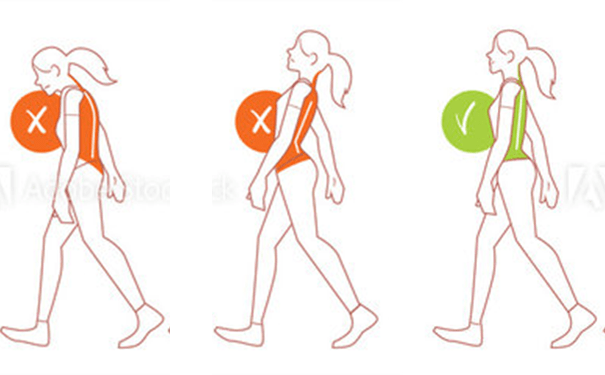
Dr. Rolf designed S.I. as a series of ten sessions, often called “the Recipe.” Each session builds on the last. AGSI teaches this Basic 10 Series with a focus on the body’s vertical line, with the goal of helping clients move with more ease and less tension. The Dr. Ida Rolf Institute groups the ten sessions into three stages:
- Sessions 1–3, foundation: freeing the outer layers of fascia, easing the breath, and balancing the feet and legs for a stable base.
- Sessions 4–7, core: deeper work from the pelvis to the head and through the legs to build internal support.
- Sessions 8–10, integration: tailored to your body, tying the work together into balanced, coordinated movement.
Most people feel a difference after the first session, and the body keeps integrating the changes after the series ends. My goal is to help you “self-correct,” with an occasional tune-up rather than endless appointments.
Does Structural Integration hurt?
It’s the question I hear most. S.I. works with your body, not against it. Sessions are slow and deliberate, and you stay in control of the pressure. If anything feels like too much, say so and I’ll adjust.
I also offer ScarWork, which helps scar tissue blend back into the surrounding tissue. It’s relaxing and not painful. I’ve also recently added BoneWork to my practice. Both ScarWork and BoneWork were developed by Sharon Wheeler, a student of Dr. Rolf’s, and all of my services belong to the same family of Dr. Rolf’s work with the fascial net.
Who can benefit?

Dr. Rolf believed every body carries some degree of imbalance and that people of all ages can benefit. I work with clients from all walks of life, including athletes, people with repetitive strain, chronic conditions or disabilities, and burn survivors. People often come to S.I. for:
- Aches that keep coming back
- Old injuries that never fully settled
- Posture and alignment
- Strain from desk work or repetitive motion
- Staying flexible and mobile with age
See the full list on Who can benefit from Structural Integration?, or read Part 3: Who is structural integration for?
S.I. is not a substitute for medical care. Talk with your doctor about new, persistent or concerning pain.
My story

I discovered S.I. as a dancer in San Francisco. Years later, a fall on black ice left me with severe nerve pain. Doctors, physical therapy, injections, chiropractic care and acupuncture each helped for a while, but nothing lasted. Structural Integration helped me rebalance and work my way out of pain. Read my full story.
That experience shapes how I work with every client. I’m an advanced S.I. practitioner trained at the Guild for Structural Integration (Natural Awakenings). I see clients at 123 West Stone Avenue in Greenville.
Ready to feel the difference?
If you are tired of managing the same aches over and over, S.I. may help you get to the source. Contact me to schedule a consultation, email info@codysmolik.com, or call (917) 544-4412.
Keep reading: Let’s Talk About Structural Integration · Part 2: How Does Structural Integration Work?