If you’ve ever heard the word Rolfing® and thought, “Isn’t that just a really deep massage?”—you’re not alone.
It’s one of the biggest misconceptions about Rolfing Structural Integration.
While it does involve hands-on work with the body’s connective tissue (fascia), Rolfing is actually an educational approach to improving posture, movement, and overall function. Rather than simply treating sore muscles, it looks at how your entire body is organized in relation to gravity.
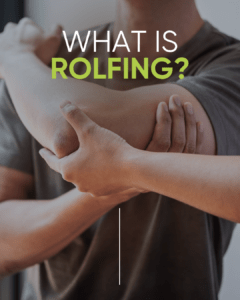
So…What Is Rolfing?
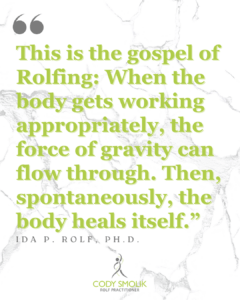
Rolfing Structural Integration was developed by Dr. Ida P. Rolf, a biochemist who spent decades studying how the body adapts to gravity and movement patterns.
Over time, injuries, repetitive movements, surgeries, stress, and even emotional experiences can cause the body’s fascial system to tighten and compensate. These compensations may not only affect the area where pain is felt—they can influence the entire body.
A Rolfer works to help restore balance throughout the body by addressing these fascial restrictions while helping clients discover more efficient ways of moving.
The goal isn’t simply to feel better for a day.
The goal is to help your body function better for years to come.
What Is Fascia?
Fascia is a web-like connective tissue that surrounds every muscle, bone, nerve, organ, and blood vessel in your body.
Think of it as your body’s internal support system.
When fascia becomes restricted or loses its natural glide, it can contribute to:
- Chronic pain
- Limited mobility
- Poor posture
- Muscle tension
- Compensation patterns
- A feeling of stiffness or imbalance
Because fascia connects everything, a problem in one area may show up as pain somewhere completely different.
How Is Rolfing Different From Massage?
Massage generally focuses on relaxing muscles and relieving tension.
Rolfing looks at why that tension developed in the first place.
Instead of chasing symptoms, sessions focus on improving how your whole body works together.
That may include:
- Improving posture
- Increasing range of motion
- Helping joints move more freely
- Creating more efficient movement patterns
- Reducing chronic strain
- Improving body awareness
Many clients notice they stand taller, breathe easier, and move with less effort after a series of sessions.
Does Rolfing Hurt?
This is probably the most common question.
The answer is: it shouldn’t be unnecessarily painful.
Modern Rolfing is not about forcing tissues to change through excessive pressure.
A skilled Rolfer works with your nervous system and fascia to create lasting change. Some areas may feel tender or intense—especially where long-held restrictions exist—but communication is always part of the process.
Treatment should be effective, not punishing.
Who Can Benefit?
Rolfing may be helpful for people experiencing:
- Chronic neck or back pain
- Hip discomfort
- Shoulder tension
- Limited mobility
- Postural imbalances
- Athletic performance goals
- Recovery after injury (with physician clearance)
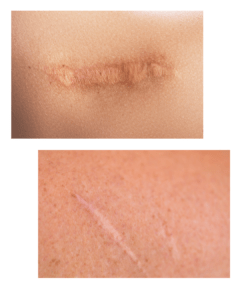
- Scar tissue restrictions
- Repetitive stress from work or hobbies
Every person is different, and a thorough evaluation helps determine whether Rolfing is an appropriate fit.
Is Rolfing Right for You?
If you’ve been treating the same pain over and over without lasting relief, it may be worth looking beyond where it hurts.
Sometimes the answer isn’t at the site of the pain—it’s in how the entire body is working together.
Rolfing Structural Integration helps address those larger patterns so your body can move with greater ease, efficiency, and comfort.
As always, consult with your physician before beginning any new treatment, especially if you have medical conditions, recent injuries, or have recently had surgery.
Curious whether Rolfing could help your specific situation? I’d be happy to answer your questions and help determine whether it’s the right fit for you.